
Measuring Health Events and Research Principles is a third-year integrated module that
combines epidemiological measurement and biostatistics with the principles required to
formulate, plan, appraise, analyse, and report medical research. It enables students to
interpret population and clinical data and to use research evidence in patient care and public
health decision-making.
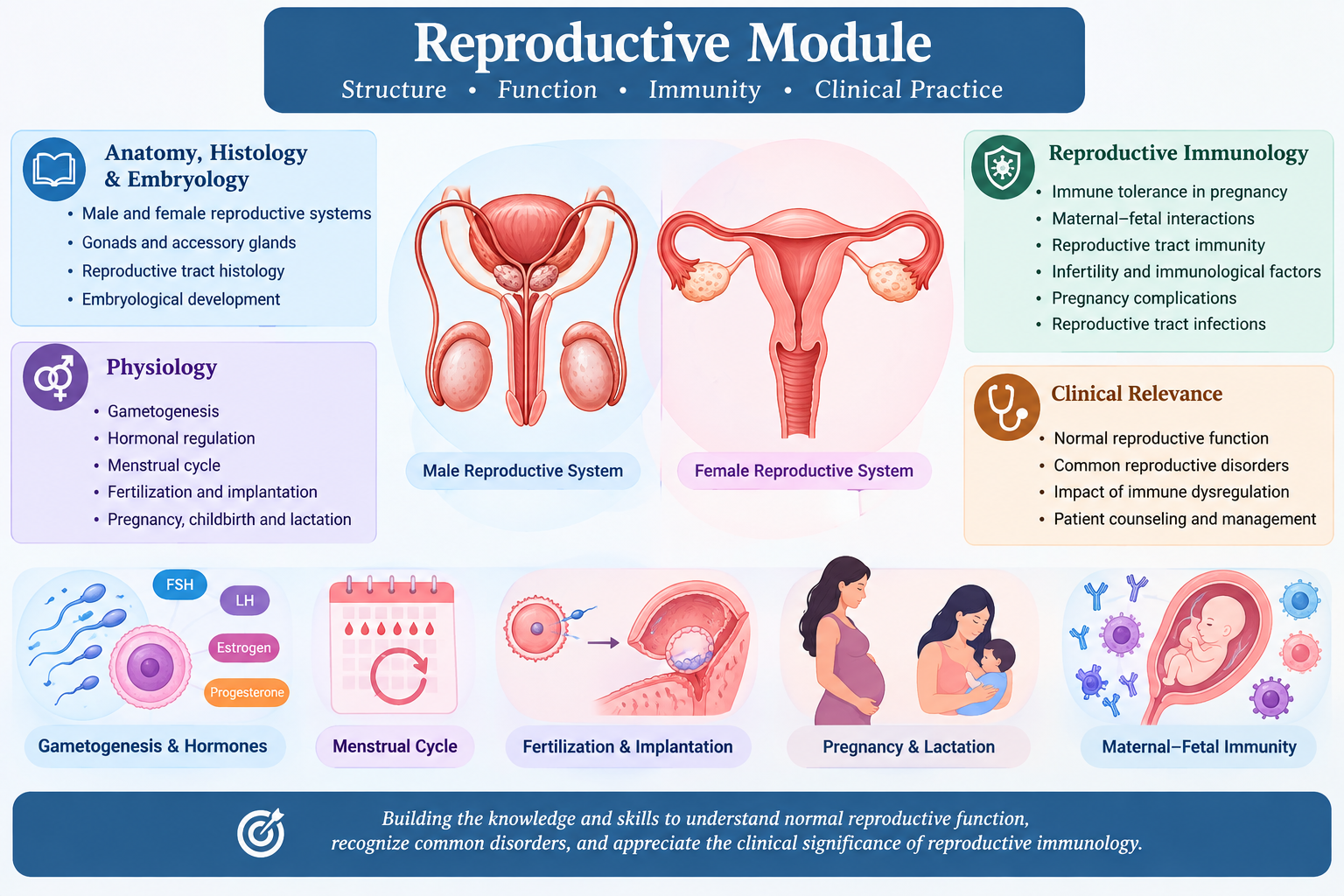
The Reproductive Module provides medical students with an integrated understanding of the structure, function of the human reproductive system. The module covers the anatomy, histology, embryology, and physiology of the male and female reproductive systems, including gametogenesis, hormonal regulation, the menstrual cycle, fertilization, implantation, pregnancy, childbirth, and lactation.Through integrated lectures, practical sessions, and clinical case discussions, students will develop the knowledge and skills necessary to understand normal reproductive function, recognize common reproductive disorders,